On the Record is a weekly column meant to round up details about new and pending recordings of interest to the new-music community: contemporary classical music and jazz, electronic and electroacoustic music, and idioms for which no clever genre name has been coined, on CD, vinyl LP, cassette, digital-only formats… you name it.
This list of upcoming release dates is culled from press releases, Amazon and other online record stores, social-media posts, and similar resources. Dates cited correspond to U.S. release of physical recordings where applicable, and are subject to change. These listings are not comprehensive—nor could they be! To submit a forthcoming recording for consideration, email information to steve@nationalsawdust.org.
Eve Essex
Photograph: Lena Shkoda
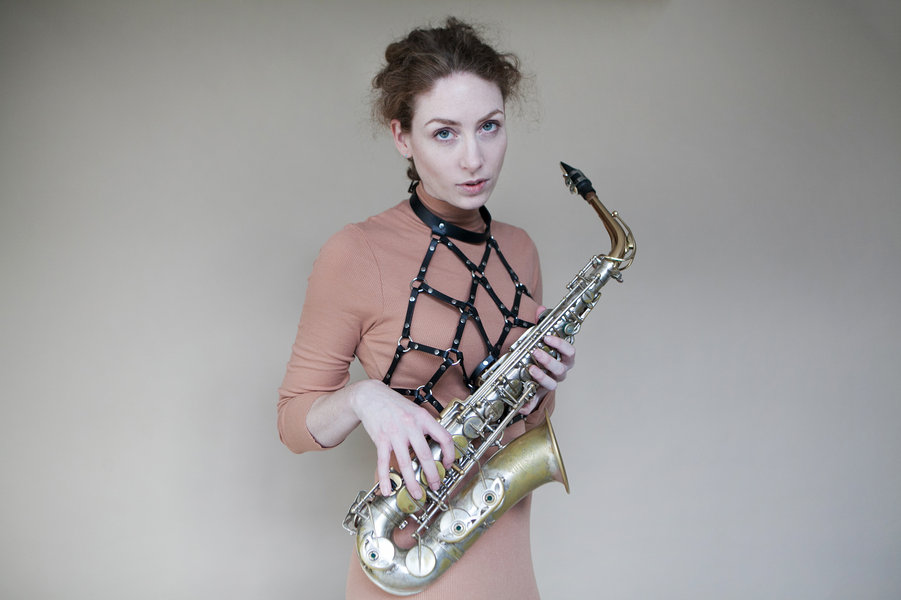
All About Eve Essex
New-music cognoscenti in New York City are sure to recognize Eve Essex as a friendly face and helpful guide during her tenure as the marketing and outreach director for Brooklyn venue Issue Project Room. Lately, though, Essex has returned to her roots as a performing artist, playing saxophone in the arty instrumental rock outfit Das Audit, and working in a number of small configurations with such artists as Via App, Hunter Hunt-Hendrix, MV Carbon, and Juan Antonio Olivares.
Now, Essex is set to release her debut solo album, Here Appear, on March 9. An impressively diverse solo set of vividly tactile electroacoustic instrumentals and heady, literate songs, the album will appear first in cassette and digital formats via Soap Library, a distinctive Brooklyn imprint run by Kerry Santullo (formerly communications and digital content manager for another Brooklyn venue, Roulette) and Rachel Barnhart (like Santullo, formerly of Brooklyn-based indie label Mexican Summer). The young label has made its splash by bundling high-quality limited-edition tape releases with wellness objects, such as aromatherapy inhalers, bath salts, and wildflower seeds. On April 20, an LP edition of Here Appear will arrive via Sky Walking, an imprint run by the electronic trio of the same name, operated by the German label Dial.
Reached by telephone just before she packed her saxophones, special effects, and various sound-producing devices into her car for a drive to Philadelphia – where on March 1 she launched a brief East Coast tour, which includes a stop at Outpost Artists Resources in Ridgewood, Queens, on March 10 – Essex talked to National Sawdust Log about her art-school origins, her transition back to music, and the development of her solo act.
NATIONAL SAWDUST LOG: One of the things that impressed me most about Here Appear is the sheer range of sonic territory you cover, from textural experimentation to free-jazz saxophone and cool electronic art song. I’m curious to know more about the route that got you to this point. I understand that you’re a classical-music renegade?
EVE ESSEX: Yeah… [laughs] definitely growing up, I thought I was going to be an orchestral musician. I played bassoon, and did that for a little bit. I went for a year to the New England Conservatory, but then had carpal tunnel problems. I wasn’t keeping up with the practice as much as I wanted to. Then I ended up in art school… I went to visit a friend who went to RISD [Rhode Island School of Design] while I was in Boston, and I just fell in love with that whole reality.
What was it about that scene that appealed to you?
Well, we ended up in lofts in the Olneyville area, where there’s a huge DIY scene. The culture was so different than classical music. And also, I love the kind of theatricality that happens in Providence – like people who have costume changes between songs, but they’re also performing in an alley. [Laughs]
Did you start out initially in a performance-art track?
I did sculpture, and I guess most of the work was revolving around musical ideas or scores. Then after I graduated, I started working with an artist, Juan Antonio Olivares – who actually just had a show open at the Whitney. He and I worked together for a pretty long time; we basically did pieces that were based on elaborate graphic scores. A lot of performances for many people – I think the smallest was for four people, and they went up to 20 people. Like, we did a fashion show where every model had a part, and was performing on instruments or props. And we made a concept album that was an iPhone app, sort of a motivational anarchist meditation app. I started playing saxophone to make New Age music for this app, and that sort of rolled me toward explicitly playing music again.
Maybe it has to do with your RISD background… it seems at a glance that as much as you’ve played at places like indie music spots like Trans-Pecos, a lot of your musical activity has happened in galleries and art spaces. Is that intentional?
I’d guess it’s been an even split, but yeah, it’s probably because I’ve always been really involved in the art community. There have been a lot of shows in galleries, and a lot of my collaborators are visual artists – like Craig [Kalpakjian] from Das Audit is a great artist in many media. There’s a lot of overlap.
As I mentioned earlier, Here Appear covers a lot of different styles. I found the initial track, “Satisfaction Theories,” really arresting… somehow, your singing sounds cool and slightly detached, yet at the same time passionate. Where did that come from?
That song in particular was the last song that I wrote for the record, so it sort of felt like merging a lot of the ideas together. Also [laughs] I finally at that point had a synthesizer that could do a bass line, which kind of opened up a different channel for me. I had been working with these organ drones a lot… there’s a few instruments in there that I had used in other places on the album, and I just wanted to see if I could move closer to a song. All of the pieces were developed over the last couple of years, from when I first started playing solo stuff. The practice began just playing saxophone with some electronics, and then I was sort of slowly finding my way to writing songs over the whole course of it. I feel like “Satisfaction Theories” kind of pulls together a lot of threads into a more constructed format.
Were there any stylistic antecedents you had in mind, something you were working toward, in terms of artists who you admired?
Yeah, I would say there’s a lot of people that figure into the sound. Jacqueline Humbert and David Rosenboom, of course, I like a lot… one of the songs is a cover of them. I had definitely been listening to that on loop pretty much since it came out. I had the songbook – Unseen Worlds actually put this up for sale just a couple of weeks ago.
Good timing!
Yeah, I got the scorebook from [Unseen Worlds founder] Tommy [McCutchon] a few years back. Part of how I was developing my vocal style was playing through those scores for the past couple years. I actually thought I was going to learn piano from the book, but I’m a terrible pianist. [Laughs] I had a much easier time working through the vocal lines. I can’t compete with David Rosenboom.
Few of us can, and fewer try.
Who else? Gosh… Annette Peacock. I really like her vocal style, the baritone… she and Jacqueline Humbert have a really great range.
The way you bring together “high art” avant-garde and classical music ideas and jazz things, improvisatory things, but also a sense of how a real pop song works… I wouldn’t say that you sound just like her, but I was reminded of Julia Holter.
Oh, yeah, I do like her work, I have to admit. I love her records.
That idea struck me pretty quickly in “Satisfaction Theories.” But then I went through the whole record and heard so many other things: the drone-based stuff that you mentioned, the Pharoah Sanders free-jazz axis. What was really interesting was that the record covers so broad a territory, yet it all sounds integrated, like one person’s conception. Is that something you consciously set out to do?
Maybe part of it was I was working through those songs as live sets, so always trying to create… like, how can I make a 30-minute experience that has a kind of narrative arc, and can feel consistent but also stay animated? I found that I was getting bored with 30 minutes of saxophone, pure instrumentals. I was trying to create this formal narrative structure. But also, I like the idea of trying to be of many time periods at once – like trying to mix medieval music, or I like Bartók and Stravinsky’s melodies a lot – and trying to cross these things with electronic music.
The interesting thing is that it doesn’t broadcast that intention. It’s not like, “I am trying to make a Bartók pop song.” There are some really interesting literary references listed on your SoundCloud and Bandcamp pages, too. Are you a bookworm by nature?
I definitely enjoy them. The sci-fi book that came up [The Third Body Problem], I’ve been in this sci-fi book club for six or seven years, so I’ve gone deep on sci-fi, for sure. That book has… I guess you might call them images from a videogame or an augmented-reality game. There was one scene where they’re describing bodies that can be dehydrated and rolled up for storage. The lyrics for the first song on the album [“Grind Away”] were kind of adapted from that scene… it’s not very literal, but the imagery, I thought, was really interesting.
In the same essay, you say that you try to create something quasi-narrative, yet also retaining – and I’m quoting you here – “the vulnerability of live performance.” Do you build in things that could potentially trip you up, in order to preserve spontaneity even within a structured tune?
When I think about performance, I find that the more interesting performances for me are ones in which you can sort of see somebody thinking through what they’re doing. I enjoy seeing somebody be vulnerable when they’re onstage, and knowing that they’re being intentional about what they’re doing. In my practice when I’m playing, I use a lot of loops that I’m recording live as I go – not 100 percent of them, but many of them. So, for example, the saxophone track on the record [“Immediate Communicator”] has almost no post-production on it. That’s pretty much how it happens live, recording the saxophone as it goes.
I would say that on both of the instrumental tracks, I have a system and I have a theme, but I’m recording it live. On [“Grind Away”], which is the one with the harmonicas, depending on how I get that lick on the harmonica on the first go, it can change the song completely. Tempos are always shifting, and it can sound pretty different based on how it’s going that night. So there’s not an idealized version, necessarily, of any of those songs – although I feel like now that I’ve made the record, in my mind that’s how it’s supposed to be. But they definitely change. And I have a different drum machine now, so all of the songs have sort of shifted.
One more thing you mention in your essay is that your vocal approach is meant to draw on your woodwind technique and phrasing. How does that impact the way you sing, exactly?
Maybe it’s not so much that it’s meant to, but just how it’s ended up. Because I played woodwinds first before I started singing, I think of the way I’m controlling my air, and also the phrasing and the tone, very similarly to how I’m playing. I can’t move as fast when I’m singing, but I try to think about moving through the range in similar ways. And it feels like the structure and the sound feel so familiar to me when I hear them.
There’s an interesting symmetry in that, given that so often you hear about horn players who say they’re emulating vocal phrasing, trying to sing through their horns. Yours is almost the flip side to that relationship.
Oh, yeah, the horn playing is definitely way more ingrained in me than singing, which feels more new and unnatural to me. [Laughs] I don’t have as fixed an idea of myself as a vocalist as I do as a horn player.
I also get a sense here and there throughout the album that, for all the artfulness of the music and performance, now and then you’re saying “don’t take this all too seriously.” I’m thinking about things like the end of “Instant Communicator,” where the brash tenor sax backs off and the slide whistles take over.
It’s interesting that that’s the example you used. When I was thinking about the slide whistles, I always think of that imagistically as being like a landscape, and hearing bird calls.
Oh, nice. I think it was just the nature of the instruments themselves, being so humble and approachable. It catches you off guard and takes you out of that place where you’re listening intently with all your aesthetic faculties firing, and you just think: “Oh, wow – slide whistle!”
[Laughs] Yeah. I’ve been collecting little things like that for a while. I mean, I have this bamboo flute that I use a lot, that I’ve had since the third grade. With those things, it’s just really easy to have them, and it diversifies the sound really quickly, and it takes you into a different place. It’s also really fun to work with things that are so limited in what they can do, and sort of finding ways to bend that. Like, I’m not a very good harmonica player, but I love how, with pedals and a little bit of effects, it can totally become a different sound.
Here Appear is due March 9, 2018, on Soap Library in cassette and digital formats; pre-ordering is available now via Bandcamp. The album arrives on vinyl April 20 on Sky Walking. Eve Essex plays a record-release show at Outpost Artists Resources in Ridgewood, Queens, on March 10; details here.
Olivia de Prato
Photograph: Giulia Iacolutti
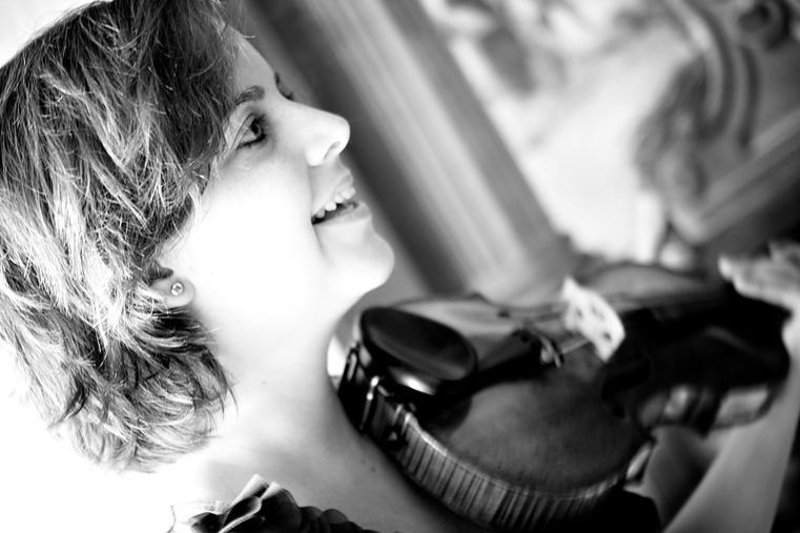
New This Week
Michael Daugherty – Dreamachine; Trail of Tears; Reflections on the Mississippi – Evelyn Glennie, Amy Porter, Carol Jantsch, Albany Symphony Orchestra/David Allan Miller (Naxos)
Olivia De Prato – Streya – works by Samson Young, Victor Lowrie, Ned Rothenberg, Taylor Brook, Reiko Fueting, and Missy Mazzoli (New Focus)
Mathias Eick – Ravensberg (ECM)
Sebastian Fagerlund – Stonework; Drifts; Transit – Ismo Eskelinen, Finnish Radio Symphony Orchestra/Hannu Lintu (Bis)
Keith Jarrett/Gary Peacock/Jack DeJohnette – After the Fall (ECM)
Coming Soon
(☆ – new addition this week)
March 8
☆ Mike Shiflet – Tetracosa, Volumes Two & Three (self-released; related Log article here)
March 9
François Bayle – Tremblements… (Recollection GRM)
Christian Zanési – Grand Bruit/Stop! l’horizon (Recollection GRM)
Yale Choral Artists – Statements: Lang, Hearne, Lash – Eric Brenner, Lydia Consilvio, Hannah Lash, Yale Philharmonia/Jeffrey Douma (Naxos)
March 16
Ensemble Musikfabrik – Kreutzungen – works by Vassos Nicolaou, Johannes Schöllhorn, Gérard Grisey, Dieter Mack (Wergo)
Brian Ferneyhough – La Terre est un Homme – Olivia Robinson, Jennifer Adams-Barbaro, Cherith Millburn-Fryer, EXAUDI/James Weeks, ensemble recherche, BBC Symphony Orchestra/Martyn Brabbins (NMC Recordings)
☆ Rafael Anton Irisarri – Sirimiri (Umor Rex)
☆ Kohl – Learned Ethics/Imposed Ethics (Umor Rex)
☆ LogarDecay – FRGL (Umor Rex)
Sarah Nemtsov – Amplified Imagination – Ensemble Adapter, ensemble mosaik, Sonar Quartett (Wergo)
Jordan Pal – Into the Wonder – Gryphon Trio, Thunder Bay Symphony Orchestra/Arthur Post (Analekta)
Wang Lu – Urban Inventory – International Contemporary Ensemble, Alarm Will Sound, Ensemble Intercontemporain, Ensemble Moderne (New Focus)
Scott Miller – Raba – Laura Cocks, Dan Lippel, Ensemble :U (New Focus)
Lucas Niggli – Alchemia Garden (Intakt)
Aruán Ortiz Trio – Live in Zürich (Intakt)
Sergio Sorrentino – dream: American Music for Electric Guitar – works by John Cage, David Lang, Jack Vees, Elliott Sharp, Alvin Curran, Morton Feldman, Christian Wolff, Larry Polansky, and Van Stiefel (Mode)
☆ Various artists – Phantom Images – improvisatory electronic works by Katherine Young, Chris Mercer, Charmaine Lee & Sam Pluta, and Aaron Cassidy (Huddersfield Contemporary Records)
Philip Venables – Below the Belt – Melinda Maxwell, Phoenix Piano Trio, Ligeti Quartet, David Hoyle, London Sinfonietta/Richard Baker (NMC Recordings)
☆ Byron Westbrook – Confluence Patterns (Umor Rex)
March 20
David Garland – Verdancy (Tall Owl Music; related Log article here)
March 23
Arild Andersen – In-House Science (ECM)
Karl Berger – In a Moment – Music for Piano & Strings (Tzadik)
Jakob Bro – Returnings (ECM)
Caroline Davis – Heart Tonic (Sunnyside)
Yuko Fujiyama – night wave (Innova)
Kyle Gann – Hyperchromatica (Other Minds)
Anne Guthrie – Brass Orchids (Students of Decay)
Ah Young Hong – a breath upwards – vocal works by Milton Babbitt and Michael Hersch (Innova)
Ursula K. Le Guin & Todd Barton – Music and Poetry of the Kesh (Freedom to Spend; related Log article here)
March 27
Hong Chulki/Will Guthrie – Mosquitoes and Crabs (Erstwhile)
Toshiya Tsunoda/Taku Unami – Wovenland (Erstwhile)
Christian Wolff/Antoine Beuger – Where Are We Going, Today (Erstwhile)
March 30
Mary Halvorson – Code Girl (Firehouse 12)
Invisible Anatomy – Dissections (New Amsterdam)
Olivier Messiaen – Catalogue d’oiseaux – Pierre-Laurent Aimard (Pentatone)
Sonar with David Torn – Vortex (RareNoise)
Sons of Kemet – Your Queen Is a Reptile (Impulse!)
April TBD
John Zorn – Insurrection (Tzadik)
April 1
Henry Threadgill 14 or 15 Kestra: Agg – Dirt… and More Dirt (Pi Recordings)
April 6
☆ Clarice Jensen – For this from that will be filled – works by Clarice Jensen, Michael Harrison, and Jóhann Jóhannsson (Miasmah)
Joe Lovano & Dave Douglas Sound Prints – Scandal (Greenleaf Music)
☆ Ashley Paul – Lost in Shadows (Slip)
Quince Ensemble – Motherland – vocal works by Gilda Lyons, Laura Steenberge, Cara Haxo, and Jennifer Jolley (New Focus)
Dan Weiss – Starebaby (Pi Recordings)
Patrick Zimmerli Quartet – Clockworks (Songlines)
April 13
☆ Anthony Braxton – Quartet (Willisau) 1991 Studio (hatOLOGY; reissue)
Duduka Da Fonseca Trio – Plays Dom Salvador (Sunnyside)
☆ Goldmund – Occasus (Western Vinyl)
☆ Silvan Schmid Quartet – At Gamut (hatOLOGY)
☆ Matthew Shipp – Symbol Systems (hatOLOGY; reissue)
April 20
☆ Basil Athanasiadis – Soft Light – Shonorities (Métier)
☆ District Five – Decoy (Intakt)
☆ Joshua Fineberg – Sonic Fictions – Pascal Contet, Arditti Quartet, Argento Chamber Ensemble/Michel Galante, Talea Ensemble/James Baker (Métier)
☆ Uli Fussenegger – San Teodoro 8 – Ernesto Molinari, Mike Svoboda, Martin Siewert, Uli Fussenegger (Kairos)
☆ Globe Unity Orchestra – Globe Unity – 50 Years (Intakt)
☆ Andrew Hamilton – Music for People – Michelle O’Rourke, Juliet Fraser, Maxime Echadour, Crash Ensemble, Ives Ensemble/Alan Pierson (NMC)
Mike McGinnis with Steve Swallow & Art Lande – Singular Awakening (Sunnyside)
Maria Monti – Il Bestario (Unseen Worlds; reissue, LP/CD only)
☆ Luigi Nono – Como una ola de fuerza y luz; …..sofferte onde serene…; Paulo de Assis – unfolding waves… con luigi nono – Claudia Barainsky, Jan Michiels, SWR Experimentalstudio, WDR Sinfonieorchester Köln/Peter Rundel, Léo Warinsky (Kairos)
☆ Wenchen Qin – Orchestral Works – Weiwei Lan, Wei Ji, Radio-Symphonieorchester Wien/Gottfried Rabl (Kairos)
Edward Simon – Sorrows & Triumphs (Sunnyside)
☆ Karlheinz Stockhausen – Kurzwellen – C.L.S.I Ensemble/Paul Méfano (Mode)
April 27
Marc Ribot’s Ceramic Dog – WRU Still Here? (Northern Spy)
☆ Tigue – Strange Paradise (New Amsterdam/NNA Tapes)
Nils Vigeland/Reiko Fueting/Daniel Lippel/John Popham – “…through which the past shines…” – solo and chamber works for guitar by Nils Vigeland and Reiko Fueting (New Focus)
May TBD
John Zorn – The Book Beriah (Tzadik/Pledgemusic; 11-CD limited edition box set)
May 11
Roman Filiú – Quarteria (Sunnyside)
Dave Holland, Evan Parker, Craig Taborn & Ches Smith – Uncharted Territories (Dare2 Records; related Log article here)
May 18
☆ Daniel Carter, William Parker & Matthew Shipp – Seraphic Light (AUM Fidelity)
Robert Honstein – An Economy of Means – Karl Larson, Douglas Perkins (New Focus)
May 25
Loadbang – Old Fires – works by Scott Wollschleger, Angélica Negrón, Taylor Brook, Paula Matthusen, William Lang, Jeffrey Gavett, and Reiko Fueting