


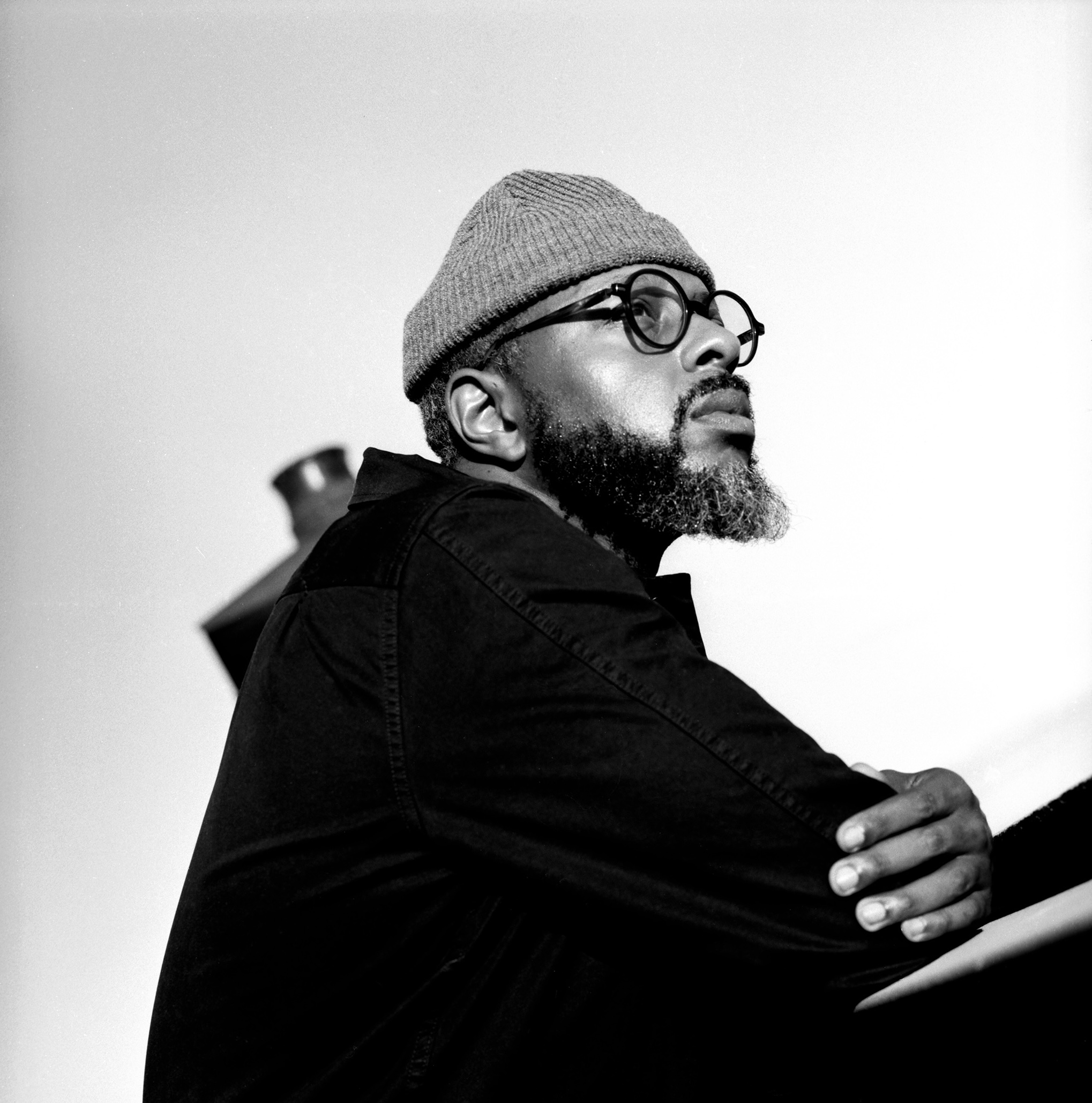

Perspective is an ongoing project featuring disabled interviewees responding to what access, care, interdependence, and more mean to them. The project began with a conversation with disability activist Judy Heumann, who asked why I call my left hand weak. I have an impaired left hand from a previous car accident, and Judy's question prompted a rethinking of what weakness and related terms central to the disabled experience. The project has spanned formats from interactive to public art, and in 2022 was released as an album on New Amsterdam Records, with Pitchfork calling it “a powerful work of love and empathy."
Experience Perspective* during doors before the makemake performances:
November 17 6:30pm-7:30pm
November 18 6:30pm-7:30pm
November 19: 6:00pm-7:00pm
November 20: 7:00pm-8:00pm
*Tickets required for entry.
Ben Tweel is a singular voice bridging medical science and sound art. By day, he’s an Associate Professor of Otolaryngology at the Mount Sinai School of Medicine, bringing a clinical understanding of auditory perception to his work; by night, he composes immersive post-ambient soundscapes as Build Buildings, alongside intermedia artist Molly Gochman. For makemake, that practice comes to life via a listening station of CONTINUUM by Build Buildings and Gochman, situated at National Sawdust’s main entrance: a slow-motion acoustic journey of shimmering textures and organic string manipulation, creating a welcoming sonic threshold as our doors transition to fully accessible entry and greeting every guest with restorative, visionary music from the moment they arrive.
Experience Continuum on November 20 from 6:00pm-6:50pm.
A re-envisioned installation of Molly Gochman's Dispersed Geographies, first conceived in dialogue with her sculptural series UKR|RUS — which reflects the shape of the Ukraine-Russia border — extends onto the sidewalks surrounding National Sawdust, inviting passersby into a shared, reflective experience. The white vinyl segments act as visual markers, transforming familiar ground into a map of recognition. By bringing borders down to the sidewalk — the contested terrain of daily mobility — Dispersed Geographies translates geopolitical separation into an embodied, accessible experience. The fragments challenge us to consider not only political borders, but the physical, sensory, and social barriers that define how different bodies navigate the world.